The best motorcycle GPS in 2026 is not automatically a dedicated Garmin anymore. Riders now have several good ways to handle navigation: a purpose-built motorcycle GPS, a CarPlay or Android Auto display, a phone running a motorcycle navigation app, or a compact turn-by-turn device such as the Beeline Moto II.
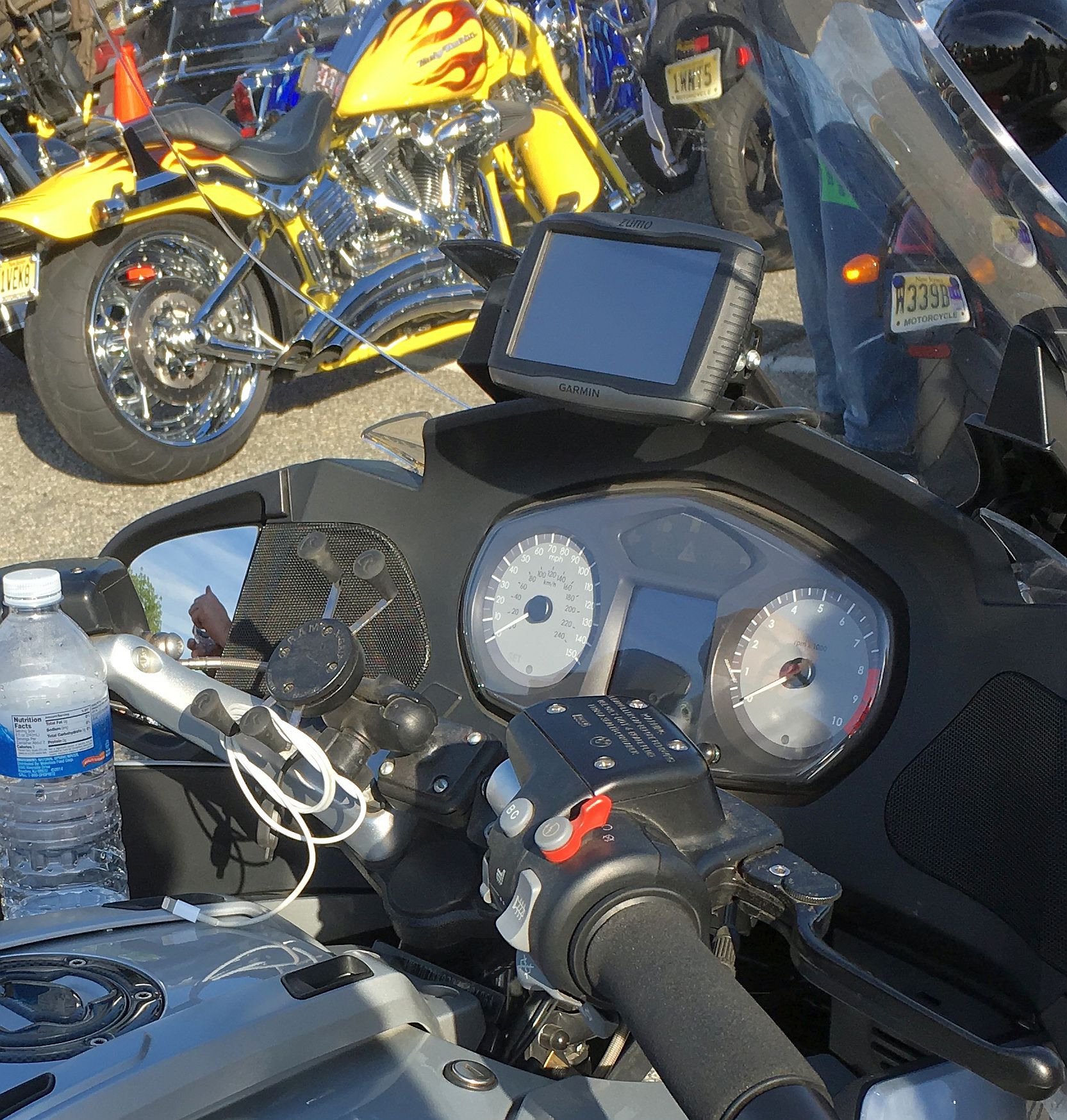
Choosing between them comes down to how you ride. A dedicated GPS still makes the most sense for long-distance touring, ADV riding and anyone who wants navigation that does not depend on a phone connection. CarPlay and Android Auto displays are appealing if you already prefer Google Maps, Waze or another phone-based app. A phone and mount remain the least expensive solution, while Beeline takes a minimalist approach that keeps a large screen off the handlebars.
[ez-toc]
Best Motorcycle GPS Options at a Glance
| Navigation System | Best For | Phone Required? | Why Consider It |
|---|---|---|---|
| Garmin Zumo XT3 | Best dedicated motorcycle GPS | No | Current Garmin platform, offline maps and motorcycle-specific routing |
| Garmin Zumo XT2 | Best previous-generation Garmin | No | Large 6-inch display and mature Garmin navigation platform |
| CHIGEE AIO-5 Lite | Best CarPlay/Android Auto option | Yes | Keeps the phone protected while putting compatible apps on the motorcycle |
| Beeline Moto II | Best minimalist navigator | Yes | Compact navigation without a large screen dominating the cockpit |
| Phone + Navigation App | Best budget option | Phone is the GPS | Lowest entry cost and widest choice of navigation apps |
1. Garmin Zumo XT3: Best Dedicated Motorcycle GPS
For riders who want a real motorcycle GPS instead of a phone-dependent display, the Garmin Zumo XT3 is where I would start.
The XT3 is Garmin’s current purpose-built motorcycle navigator. It is designed for motorcycle use rather than being an automotive GPS adapted for handlebars, with a glove-friendly display, rugged construction and weather resistance.
The biggest reason to choose it, though, is Garmin’s motorcycle navigation ecosystem.
Garmin can deliberately look for curvy and interesting roads instead of simply calculating the fastest route from Point A to Point B. You can work with routes and GPX files, use offline mapping and navigate well beyond reliable cellular coverage.
That still gives a dedicated Garmin an advantage over phone-dependent systems for long-distance touring and riding in remote areas.
Best for: Touring, ADV riding, long trips, GPX routes and riders who do not want their navigation system dependent on a phone screen.
Skip it if: You mainly navigate with Google Maps, Waze or another smartphone app and want to continue using that interface.
2. Garmin Zumo XT2: Best Previous-Generation Garmin
The arrival of the Zumo XT3 does not make the Garmin Zumo XT2 useless.
The XT2 remains a capable motorcycle navigator with a large 6-inch display, weather resistance, motorcycle-specific routing, GPX support, topographic maps and satellite imagery.
It also works with Garmin’s Tread app for route planning and connected features.
That makes the XT2 particularly interesting when it is discounted enough to create a meaningful difference from the XT3.
I would not buy one simply because the XT2 model name is familiar. Compare the current selling price of both generations first. Previous-generation electronics make the most sense when the savings are substantial.
Best for: Riders who want a large-screen Garmin and find the XT2 at a worthwhile discount.
Skip it if: The price is close to an equivalent XT3.
3. CHIGEE AIO-5 Lite: Best Motorcycle CarPlay and Android Auto Option
The CHIGEE AIO-5 Lite takes a completely different approach to motorcycle navigation.
Instead of replacing the navigation ecosystem on your phone, it gives that ecosystem a dedicated motorcycle display.
The AIO-5 Lite supports Apple CarPlay and Android Auto, allowing compatible apps running on your smartphone to appear on the screen mounted to the motorcycle.
That solves one of my main concerns with using a phone as a motorcycle GPS: your expensive smartphone does not need to spend every ride exposed to direct sunlight, weather and handlebar vibration.
You still get the navigation apps you already know.
The AIO-5 Lite also goes beyond navigation with front and rear cameras and additional motorcycle-specific features. That makes it more of an integrated electronics system than a simple GPS.
If I wanted a dedicated offline navigator for long-distance touring, I would choose the Garmin.
If I already used CarPlay or Android Auto regularly and wanted the same basic experience on my motorcycle, CHIGEE would be considerably more appealing.
Best for: Riders who want CarPlay or Android Auto without mounting their primary phone directly on the handlebars.
Skip it if: You specifically want a standalone navigator that does not depend on a smartphone.
4. Beeline Moto II: Best Minimalist Motorcycle Navigator
The Beeline Moto II goes in almost the opposite direction from today’s increasingly large GPS and CarPlay displays.
Instead of putting another dashboard on the handlebars, Beeline shows the navigation information you need on a compact screen.
Moto II provides turn-by-turn guidance and ride information while using the Beeline app on a connected smartphone for routing.
The attraction is simplicity.
A large map is useful when you want to inspect intersections, terrain and surrounding roads. It can also become unnecessary visual clutter when all you need to know is where the next turn is.
Beeline is particularly interesting on motorcycles with limited cockpit space or for riders who do not want another large rectangular display dominating the handlebars.
The tradeoff is equally clear. This would not be my first choice if detailed mapping, off-road tracks or complicated GPX routes were central to the way I ride.
Best for: Minimalist installations, smaller motorcycles and riders who want simple glanceable directions.
Skip it if: You want detailed maps, off-road tracks or more complex route management on the display.
5. Phone and Navigation App: Best Budget Motorcycle GPS Setup
For plenty of riders, the best motorcycle GPS is still the phone already in their pocket.
A secure motorcycle phone mount combined with Google Maps, Waze, Calimoto, REVER, Scenic or another navigation app can provide excellent navigation without buying another electronic device.
This approach also gives you the widest choice of software.
Need normal point-to-point directions? Google Maps works.
Want motorcycle-specific route planning that favors interesting roads instead of simply finding the quickest route? Apps such as Calimoto, REVER and Scenic are built more around that style of riding.
There are still reasons I would hesitate before putting my primary phone on the handlebars for every ride.
Heat, direct sunlight, rain, charging, vibration and the consequences of a mount failure all matter more on a motorcycle than they do inside a car. Modern flagship phones are expensive enough that damaging one can quickly wipe out the savings from not buying a dedicated GPS.
For occasional navigation, however, a phone and a quality mount remain difficult to beat.
Best for: Occasional navigation, commuting and riders who want the lowest-cost entry into motorcycle navigation.
Skip it if: You regularly tour, ride in severe weather or simply do not want your main phone exposed on the motorcycle.
What About the TomTom Rider 550?
The TomTom Rider 550 is still worth discussing because many riders continue to use one.
It includes the features that made the Rider series popular: a glove-friendly weather-resistant display, winding-road routing, Wi-Fi updates and the ability to operate in portrait or landscape orientation.
The issue is age.
The Rider 550 belongs to an older generation of hardware than Garmin’s newest Zumo products. I would not put it beside the XT3 as an equal current-generation recommendation for someone buying from scratch in 2026.
That does not make an existing Rider 550 useless.
If you already own one and it continues to do what you need, there is little reason to replace it simply because newer hardware exists.
For a new purchase, however, I would start elsewhere.
Dedicated Motorcycle GPS vs. CarPlay
This has become one of the most important decisions when choosing a motorcycle navigation system.
A dedicated motorcycle GPS stores its own maps and is designed from the beginning to function as a navigator.
A motorcycle CarPlay or Android Auto display instead uses the processing, connectivity and compatible apps on your smartphone while giving you a separate screen on the bike.
Neither approach is automatically better.
Choose a Dedicated Motorcycle GPS If:
- You take long touring or ADV trips.
- You need reliable offline navigation.
- You use GPX tracks and carefully planned routes.
- You want hardware designed specifically for motorcycle vibration and weather.
- You do not want navigation completely dependent on your smartphone.
Choose CarPlay or Android Auto If:
- You already prefer phone-based navigation apps.
- You want current traffic and connected services.
- You do not want your actual phone exposed on the handlebars.
- You want navigation, music and calls integrated into one familiar interface.
- You already use CarPlay or Android Auto in your car.
For many street riders, a CarPlay display is becoming a compelling alternative.
For long-distance touring, GPX-heavy rides and off-pavement use, I still see a strong case for dedicated Garmin hardware.
What Should You Look for in a Motorcycle GPS?
Do not choose a motorcycle navigation system from the feature list alone.
The things that matter on a motorcycle are different from what matters in a car.
Sunlight Readability
A great-looking display that becomes difficult to see in direct sunlight is almost useless on a motorcycle.
Brightness, contrast and viewing angle matter considerably more here than they do inside a vehicle.
Glove Operation
You should not need to remove your gloves every time you interact with the GPS.
Purpose-built motorcycle units are designed around this problem. With other displays, usability can depend on both the screen and the gloves you wear.
Weather Resistance
Rain is a normal operating condition for motorcycle electronics.
A device intended to remain mounted on the bike should have meaningful weather protection rather than relying on you to scramble for a cover whenever the weather changes.
Mounting
Figure out where the device will sit before buying it.
A huge display sounds great until it blocks the instrument cluster, touches the windscreen or interferes with the controls at full steering lock.
The mounting position also affects visibility, vibration and how far you have to move your eyes away from the road.
For more on placement and mounting hardware, see our motorcycle GPS mounting guide.
Power
Battery operation may be fine for shorter rides.
For touring and regular navigation, permanent or semi-permanent motorcycle power is much more convenient.
Hardwiring also eliminates the routine of discovering that the GPS or display was not fully charged before the ride.
Offline Navigation
This becomes much more important once you leave heavily populated areas.
If losing cellular coverage could leave you without usable navigation, make sure the GPS or app supports the offline maps and routing you need before the trip begins.
Route Planning and GPX Support
There is a major difference between finding the quickest way to a restaurant and planning an all-day motorcycle ride across specific roads.
Touring and ADV riders should pay close attention to route planning, waypoint handling, GPX support and how easily routes can move among a computer, phone and navigation device.
Our Garmin Zumo GPX guide covers that side of motorcycle navigation in more detail.
Is a Motorcycle GPS Better Than a Phone?
For serious motorcycle travel, it still can be.
A purpose-built motorcycle GPS gives you a weather-resistant and vibration-tolerant display, offline maps and dedicated navigation hardware without risking your primary phone.
A phone wins on app choice, familiarity and initial cost.
CarPlay and Android Auto displays now sit between those two approaches. They let the smartphone do much of the work while keeping the phone itself away from the handlebars.
That is why the old question of “Garmin or phone?” no longer describes the entire motorcycle-navigation market.
Which Motorcycle GPS Would I Choose?
For a rider who wants a traditional purpose-built motorcycle navigation system, I would start with the Garmin Zumo XT3.
It is the logical current-generation choice for touring, GPX routes, offline navigation and riders who want navigation hardware designed specifically around a motorcycle.
If I primarily wanted Google Maps, Waze or other smartphone apps without putting my expensive phone on the handlebars, I would look closely at a CarPlay or Android Auto motorcycle display instead.
For a minimalist cockpit, the Beeline Moto II is the most interesting alternative.
And if navigation is only something you use occasionally, there is nothing wrong with starting with a good phone mount and an app you already know.
The important change is that there is no longer one correct answer to “What is the best motorcycle GPS?”
Dedicated motorcycle GPS units still have a place. They now share the road with several very good alternatives.
Related Motorcycle Navigation Guides
For more help setting up motorcycle navigation, see our motorcycle GPS mounting guide, Garmin Zumo GPX guide, motorcycle GPS installation guide, and guide to keeping motorcycle navigation equipment protected from rain.