The Garmin Zumo XT3 is the third generation of Garmin’s XT-series motorcycle GPS, and Garmin did considerably more this time than change the model number. The XT3 is available in two screen sizes, adds faster positioning, doubles the internal storage of the XT2, introduces live lean-angle information and can even add track and drag-racing features through Garmin’s optional Performance Package.
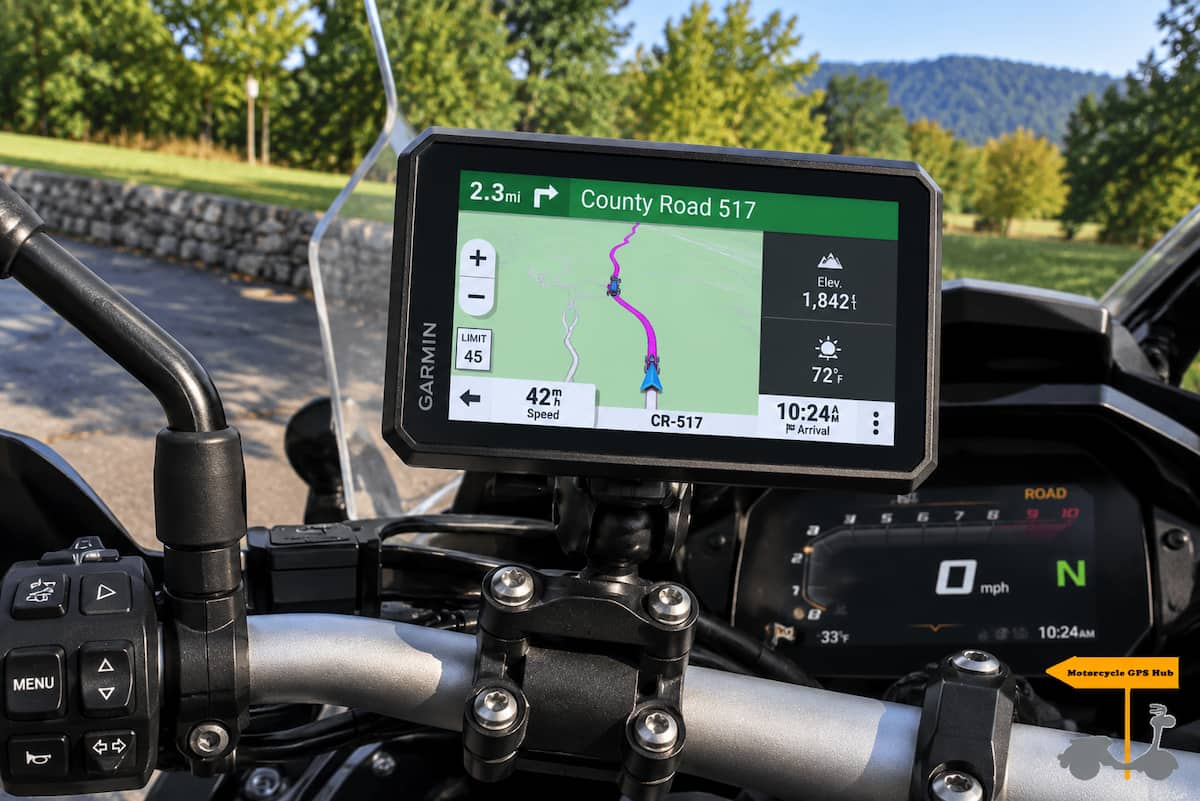
More importantly, Garmin has kept the things that made the Zumo XT series appealing in the first place: a bright glove-friendly screen, rugged construction, motorcycle-specific routing, downloadable satellite imagery and a navigation system that does not depend on having cell service.
So is the Zumo XT3 now the motorcycle GPS to buy, and is there enough here for an XT2 owner to upgrade? Let’s take a closer look.
The Zumo XT3 is Garmin’s most capable motorcycle navigator to date. If you are buying a dedicated Garmin motorcycle GPS today, this is where we would start. Existing XT2 owners have less reason to rush because the 6-inch display and basic navigation experience remain familiar, but the XT3 adds enough new hardware and riding features to make it a legitimate new generation rather than a minor refresh.
What Is the Garmin Zumo XT3?
The Zumo XT3 is Garmin’s current purpose-built motorcycle GPS navigator and the successor to the Zumo XT2.
Garmin has been making motorcycle-specific GPS units for years, but the XT family represented a major step forward because it combined a large, bright display with the rugged construction expected from a motorcycle navigator.
The XT3 continues that formula while expanding it in a couple of important directions.
First, you no longer have to put a large 6-inch navigator on every motorcycle. Garmin offers the XT3 with either a 4.7-inch or 6-inch display. That makes the XT3 much easier to fit to everything from a smaller sport bike to a full-size touring motorcycle.
Second, Garmin is beginning to turn the Zumo into more than a navigation device. The XT3 can display lean-angle information, record additional ride data and, with an optional subscription, provide track and drag-racing functions.
That is a notable change in direction for the Zumo family.
Garmin Zumo XT3 Specifications
| Feature | Garmin Zumo XT3 |
|---|---|
| Screen sizes | 4.7 inches or 6 inches |
| Resolution | 1280 x 720 |
| Display | High-brightness, glove-friendly color touchscreen |
| Water rating | IPX7 |
| Dust rating | IP6X |
| Drop rating | MIL-STD-810 |
| Internal storage | 64 GB |
| Memory card | microSD support up to 256 GB |
| Positioning | 25 Hz multi-GNSS |
| Battery | Up to 7 hours; up to 5 hours at full backlight |
| Orientation | Landscape or portrait |
4.7-Inch or 6-Inch Zumo XT3?
Offering two screen sizes may turn out to be one of Garmin’s smartest XT3 decisions.
The 6-inch XT3 is the obvious choice for larger touring and adventure motorcycles. A large navigation screen is easier to glance at quickly, and that matters when you are moving at highway speeds and do not want to spend unnecessary time looking away from the road.
But bigger is not always better on a motorcycle.
The 4.7-inch XT3 is considerably more compact. Garmin lists the smaller model at about 7 ounces compared with roughly 12 ounces for the 6-inch version.
That makes the 4.7-inch XT3 especially interesting for sport bikes, naked bikes and motorcycles where the instrument area is already crowded.
The mounting hardware differs as well. Garmin lists post-mount hardware with the 4.7-inch model, while the 6-inch XT3 includes a handlebar mount kit with a U-bolt base.
Neither model is universally better. Pick the screen size that works with your motorcycle and how you ride.
If you have not installed a dedicated GPS before, our motorcycle GPS installation basics guide covers positioning, power and other things worth considering before you start attaching hardware to the bike.
The Display Remains One of the Big Reasons to Buy a Zumo
Both XT3 sizes use a 1280 x 720 high-brightness touchscreen designed to work while wearing gloves.
That may not sound revolutionary until you compare it with trying to operate a phone on the handlebars in direct sunlight while wearing motorcycle gloves.
A dedicated GPS should be something you can glance at quickly and operate without fighting the screen. Garmin has understood that for a long time, and the XT series remains especially strong here.
The 6-inch XT3 does not provide a resolution upgrade over the XT2, so current XT2 owners should not expect a dramatically sharper display simply by moving to the new model.
New buyers, however, are still getting one of the main strengths of the XT platform.
It Is Built for Motorcycle Use
This is where the comparison between a motorcycle GPS and an ordinary automotive GPS becomes more meaningful.
The XT3 carries an IPX7 water-resistance rating, giving it the kind of weather protection expected from equipment designed to live on a motorcycle. Garmin also rates the XT3 IP6X for dust protection and lists MIL-STD-810 drop testing.
Those specifications matter on a motorcycle. The navigator sits outside where it deals with rain, road grime, dust, heat and constant vibration.
You can certainly put an automotive Garmin on a motorcycle, and plenty of riders have done exactly that. But there are compromises. We cover those in our guide to using a Garmin Drive or Nuvi GPS on a motorcycle.
The Zumo is expensive partly because none of that adaptation should be necessary.
Motorcycle Navigation Is Still the Main Attraction
The new performance features are interesting, but navigation remains the primary reason to buy a Zumo XT3.
Garmin continues to provide motorcycle-oriented routing instead of treating the XT3 like a waterproof car GPS.
Garmin Adventurous Routing can deliberately favor more entertaining roads rather than simply selecting the quickest path between two destinations.
Depending on your routing choices, that can mean more curves, more elevation changes and fewer major highways.
For motorcycle riders, that is a fundamentally different approach to navigation.
On a car trip, shaving 12 minutes from the drive might be the goal. On a motorcycle ride, those extra 12 minutes might contain the best road of the day.
Great Rides and Popular Moto Paths
The XT3 works with two Garmin route-discovery features. Popular Moto Paths can show roads commonly ridden by other motorcyclists directly on the map, while Great Rides lives in the Garmin Tread smartphone app and lets riders browse highly rated routes from other Zumo users, bookmark them and sync them to the navigator.
These features fit the Zumo better than generic points of interest do because motorcycle riders frequently choose a destination around the ride itself.
If you are spending hundreds of dollars on a motorcycle-specific navigator, it should help you find good motorcycle roads. Garmin increasingly seems to understand that.
Topographic Maps and Satellite Imagery
The XT3 is not limited to conventional street maps.
Garmin includes topographic mapping and supports downloadable satellite imagery, making the Zumo considerably more useful when pavement ends.
That matters most to adventure and dual-sport riders, but even road riders may appreciate having additional geographic context when traveling through unfamiliar areas.
For riders who want additional mapping detail, an active Outdoor Maps+ subscription adds premium map layers and additional mapping content.
GPX Files Remain a Major Advantage
The Zumo XT3 supports route and track file formats including GPX, which remains one of the best reasons to own a dedicated motorcycle GPS if you participate in organized rides or build detailed trips before leaving home.
Someone else can create a route, send you the GPX file and you can put that ride onto the Zumo rather than trying to recreate every waypoint manually.
It is also useful for long-distance touring where the route matters just as much as the destination.
If you are new to this, see our guide to using GPX files with a Garmin Zumo.
25 Hz Positioning Is More Interesting Than It Sounds
The XT3 increases positioning frequency to 25 Hz multi-GNSS.
That is easy to dismiss as a specification nobody needs to care about, particularly when the GPS is simply telling you to make a right turn two miles from now.
But the XT3 is doing considerably more with position and motion data than older Zumo units.
Garmin now wants the device to measure things such as lean angle and track performance. Updating position data more frequently makes considerably more sense in that context.
You should not buy an XT3 because the number 25 is larger than 10. But the faster positioning hardware helps explain how Garmin is expanding the Zumo beyond conventional navigation.
Live Lean Angle Is New to the XT3
One of the most visible new XT3 features is the live lean-angle gauge.
The XT3 can display the motorcycle’s lean angle in real time and include lean-angle information in the ride data available afterward.
Garmin also allows ride information to be reviewed afterward, rather than requiring the rider to stare at performance data while navigating a curve.
That is exactly how this type of feature should be used. A motorcycle GPS should reduce distractions while riding, not create new ones.
Lean-angle information is not necessary to get from New Jersey to North Carolina, obviously. But it is an interesting addition for riders who enjoy looking at their ride data afterward.
Garmin Performance Package
The XT3 takes that idea farther with the optional Garmin Performance Package.
This is a paid service intended for closed-course track and drag-racing use.
With the Performance Package active, riders can record lap times, delta times and drag-racing milestones such as 0-60 mph, eighth-mile and quarter-mile times.
Garmin also provides additional session and performance information that can be reviewed after the ride.
This is going to be completely irrelevant to many touring riders, and that is fine. You do not need the Performance Package to use the XT3 as a normal motorcycle navigator.
But it gives the XT3 a second personality that previous Zumo models never really had.
A rider could use the same device for a 1,000-mile road trip and a closed-course track day.
64 GB of Internal Storage
Garmin has doubled internal storage compared with the XT2, giving the XT3 64 GB.
The XT3 also supports microSD cards up to 256 GB.
That is useful because a modern navigation device may carry far more than a basic road map. Topographic maps, satellite imagery, downloaded routes and other map data all compete for storage.
More internal storage also means riders are less likely to immediately start juggling maps and files simply because they bought additional content.
This is not the most exciting XT3 upgrade, but it is one of the most practical.
The Tread App Is an Important Part of the System
Garmin continues to integrate the Zumo with its Tread smartphone app.
The app can be used to work with routes, tracks and waypoints and to review information from rides.
Compatible riders can also use Garmin’s Group Ride Mobile features through the Tread ecosystem when the necessary phone and cellular connections are available.
The Zumo can additionally work with other Garmin products including compatible inReach satellite communicators, Garmin PowerSwitch accessories, the Garmin Handlebar Controller and other motorcycle-oriented Garmin hardware.
You do not need to build an entire Garmin ecosystem around the XT3, but the option is there.
Garmin Zumo XT3 vs XT2
This is probably the comparison most shoppers are going to make.
| Feature | Zumo XT2 | Zumo XT3 |
|---|---|---|
| Screen choices | 6 inches | 4.7 or 6 inches |
| Resolution | 1280 x 720 | 1280 x 720 |
| Internal storage | 32 GB | 64 GB |
| Positioning frequency | 10 Hz multi-GNSS | 25 Hz multi-GNSS |
| Battery life | Up to 7 hours | Up to 7 hours |
| Live lean angle | No | Yes |
| Performance Package | No | Available |
| Dust rating | Not specified | IP6X |
There is enough here to call the XT3 a real new generation, but there is also no reason to pretend the XT2 suddenly became obsolete.
If you already own a 6-inch XT2 and primarily use it for ordinary road navigation, keep using it. You still have a large 1280 x 720 display, motorcycle routing and up to seven hours of quoted battery life.
The XT3 becomes a more compelling upgrade if you want the smaller 4.7-inch form factor, additional internal storage, faster positioning, lean-angle information or Garmin’s new track-oriented features.
For somebody buying from scratch, however, we would choose the XT3 unless the XT2 is available at a substantial discount.
What About the Original Zumo XT?
The original Zumo XT still deserves some respect because it established most of the formula Garmin continues using today.
It brought a bright 5.5-inch high-resolution display, rugged motorcycle construction, adventure-oriented routing and satellite imagery together in a package that was a major improvement over older motorcycle GPS designs.
That does not mean we would pay anywhere near XT3 money for one today.
If you find an original XT refurbished or deeply discounted, it can still make a very capable motorcycle navigator. For a rider who only wants reliable navigation, it may be all the GPS necessary.
But at similar prices, buying two generations back makes little sense.
That is also why we are going to treat the Zumo XT, XT2 and XT3 as separate generations on MotorcycleGPSHub. Someone shopping for a discounted original XT has a very different question from somebody deciding whether to upgrade an XT2 to an XT3.
What We Like About the Garmin Zumo XT3
- Two screen sizes: the new 4.7-inch option makes the XT platform practical on more motorcycles.
- Excellent rugged specifications: IPX7 water resistance, IP6X dust protection and MIL-STD-810 drop testing are appropriate for motorcycle use.
- Bright glove-friendly display: still one of the major advantages of a dedicated Zumo.
- 64 GB of internal storage: twice what Garmin provided in the XT2.
- 25 Hz positioning: useful as Garmin expands ride and performance recording.
- Motorcycle-specific routing: Garmin continues to understand that riders do not always want the fastest road.
- Topographic and satellite mapping: particularly useful for adventure riders.
- GPX support: essential for organized rides and detailed route planning.
- Lean-angle data: not necessary, but a genuinely interesting addition.
What We Do Not Like
- The 6-inch display is not a major upgrade from the XT2. Screen size and resolution remain the same.
- The Performance Package costs extra. Some of the XT3’s most interesting new performance features require a subscription.
- A dedicated motorcycle GPS is still expensive. Riders who only need basic navigation may be perfectly happy with a smartphone.
- The Garmin ecosystem can get expensive quickly. Add controllers, satellite communication, radar and other accessories and the total cost can climb considerably.
Who Should Buy the Zumo XT3?
The XT3 makes the most sense for riders who travel enough to justify having a dedicated navigator permanently installed on the motorcycle.
Long-distance touring riders are an obvious fit. So are adventure riders and anyone who frequently builds custom routes or imports GPX files.
Riders who travel through areas with unreliable cellular coverage also have a strong reason to prefer dedicated offline navigation over depending entirely on a phone.
The new 4.7-inch version makes the XT3 especially interesting for riders who previously looked at the 6-inch XT2 and decided it was simply too large for their cockpit.
On a larger touring motorcycle, we would still choose the 6-inch screen. Navigation is something you should be able to read with a quick glance, and more screen area helps.
If most of your riding consists of short local trips and you already have a solid motorcycle phone mount, however, spending this much on a Zumo is harder to justify.
Is the Garmin Zumo XT3 Worth It?
For a new buyer looking specifically for a dedicated motorcycle GPS, yes, the Zumo XT3 is the Garmin model we would buy.
The more difficult question is whether the XT3 is worth replacing an XT2.
For basic road navigation, probably not. Garmin did not suddenly make the XT2 bad, and the 6-inch XT3 keeps the same display size and resolution.
But riders interested in lean-angle data, the optional performance tools, faster positioning, more storage or the compact 4.7-inch version have legitimate reasons to move up.
The XT3 is therefore less of a mandatory upgrade for existing owners and more of a significantly better starting point for new buyers.
Garmin Zumo XT3 Review Verdict
The Zumo XT3 is what we wanted to see from the third generation of Garmin’s XT family.
Garmin did not throw away a design that was already working. Instead, it addressed one of the XT2’s biggest limitations by offering a smaller model, doubled the internal storage, substantially increased positioning frequency and added new ride-data capabilities.
At the same time, the things that matter most remain intact: the XT3 is a bright, rugged, glove-friendly motorcycle navigator with route planning features designed specifically for riders.
The performance functions will get much of the attention because they are new, but they are not the reason most people should buy an XT3. The real appeal is still having a motorcycle GPS that was designed from the beginning to live on a motorcycle.
If we were buying a new Garmin motorcycle GPS today, the Zumo XT3 would be our first choice.